
A faulty EVAP charcoal canister can affect more than the vehicle’s ability to store fuel vapors. If activated carbon particles escape from a damaged canister, they may travel through the EVAP system and interfere with the operation of the canister purge solenoid.
In some cases, this contamination can prevent the purge valve from sealing properly, potentially contributing to drivability complaints and EVAP system faults.
A real-world repair case from a Mazda 6 owner illustrates how carbon contamination inside a purge solenoid can point to a problem originating in the charcoal canister itself.
1. Understanding the EVAP Charcoal Canister and Purge Solenoid
The Evaporative Emission Control System (EVAP) is designed to prevent fuel vapors from escaping into the atmosphere.
Two important components in this system are the charcoal canister and the purge solenoid.
What Does the Charcoal Canister Do?
The charcoal canister contains activated carbon that captures and stores fuel vapors from the fuel tank.
When operating conditions are suitable, the engine control module (ECM) commands the purge valve to allow stored fuel vapors to flow toward the engine intake, where they can be burned during combustion.
The canister must retain its activated carbon while allowing fuel vapors and air to move through the system as designed.
What Does the EVAP Purge Solenoid Do?
The EVAP purge solenoid controls the flow of stored fuel vapors from the charcoal canister to the engine intake.
Depending on the vehicle design, the valve may be controlled through on/off commands or pulse-width modulation (PWM).
Its operation is managed by the engine control module according to operating conditions and the vehicle’s emissions control strategy.

2. A Real-World Case: Carbon Particles Found Inside the Purge Solenoid
In a repair case shared by a Mazda 6 owner on an automotive forum, the driver reported that the vehicle felt sluggish during acceleration.
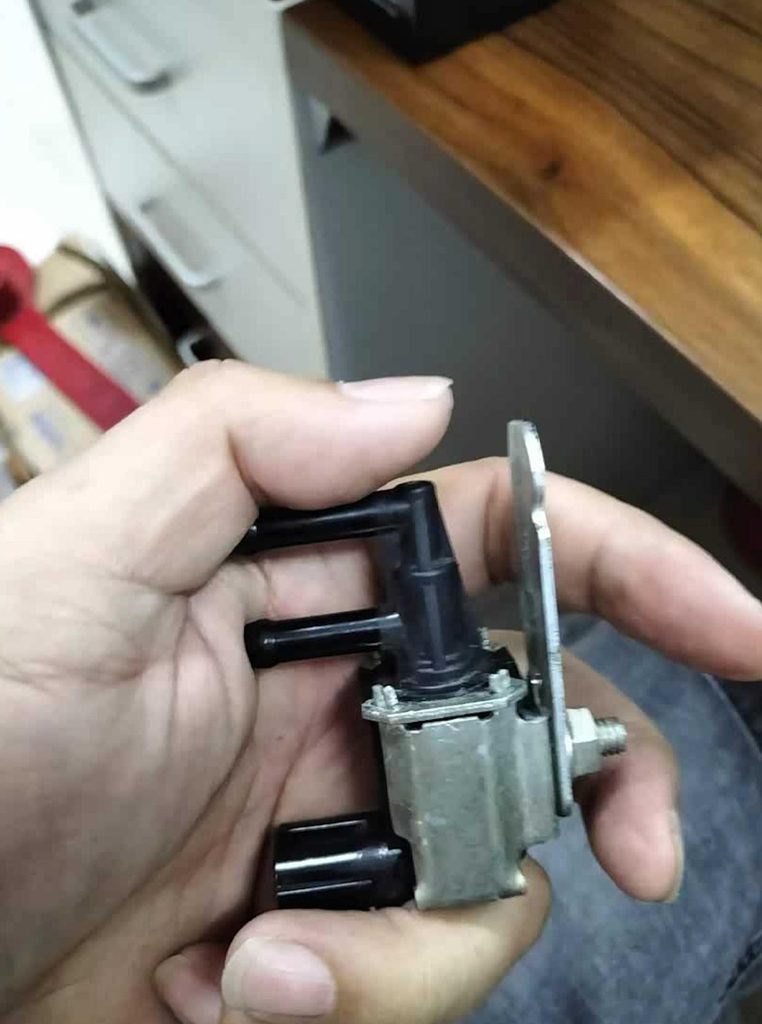
During inspection, the owner found that the EVAP purge solenoid appeared to allow continuous airflow under the test conditions described in the original post.
After removing and disassembling the valve, the owner discovered small activated carbon particles inside the component.
The particles appeared to have entered the valve from the charcoal canister. According to the owner’s inspection, this contamination was preventing the valve from sealing correctly.
The finding suggested that the purge solenoid might not have been the original source of the problem. Instead, the charcoal canister could have been the upstream source of contamination.
3. How Can Activated Carbon Particles Affect a Purge Solenoid?
The purge solenoid contains internal moving and sealing components that regulate vapor flow.
When foreign particles enter the valve, they may interfere with the sealing surfaces or internal movement.
Possible consequences include:
- The valve may not close completely.
- Unwanted vapor flow may occur when the valve should be closed.
- The EVAP system may not operate as intended.
- The vehicle may experience drivability complaints under certain operating conditions.
- EVAP-related diagnostic trouble codes may be stored.
The exact symptoms depend on the vehicle’s EVAP system design, the degree of contamination, and the operating conditions.
A purge valve that does not seal correctly should therefore be investigated as part of the complete EVAP system rather than treated as an isolated component failure.
4. Inspecting the Charcoal Canister: Finding the Root Cause
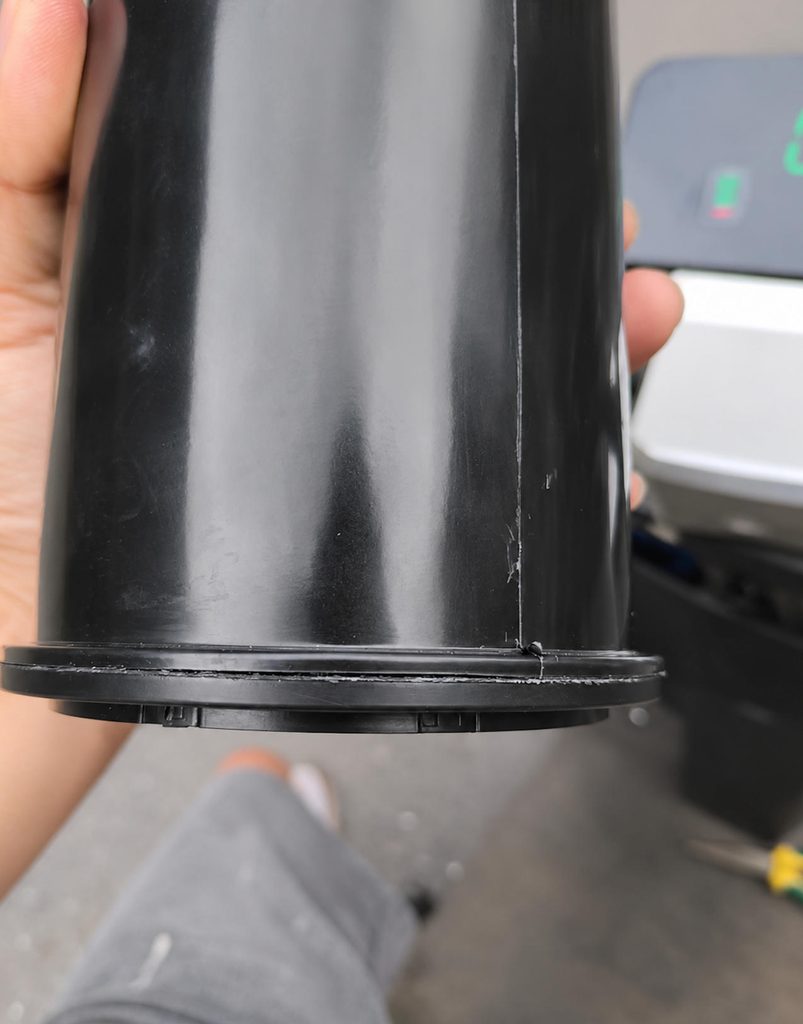
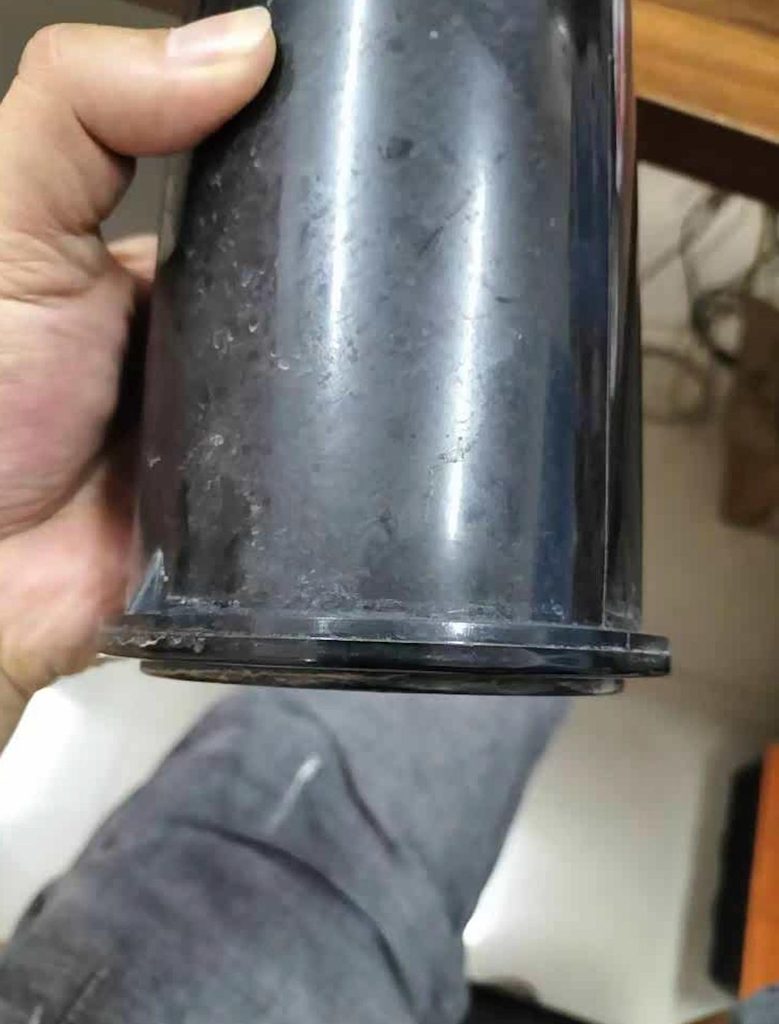
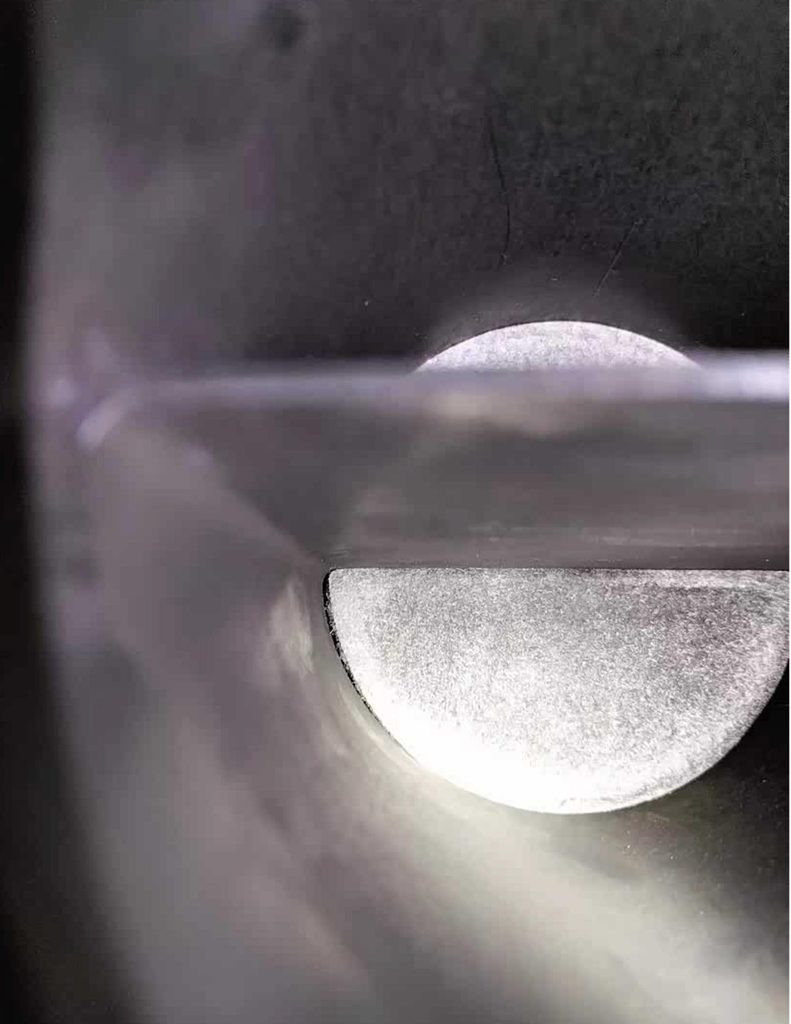
After discovering carbon particles inside the purge solenoid, the owner inspected the charcoal canister.
The original post describes a gap near the filter material inside the canister. The owner believed this gap allowed activated carbon particles to escape and travel toward the purge solenoid.
This observation is important because replacing or cleaning the purge valve alone may not solve the underlying problem if the canister continues releasing carbon particles.
5. Recommended Diagnostic Approach
When activated carbon contamination is suspected, technicians should investigate the source of the particles before replacing individual components.
A systematic inspection may include the following steps.
Step 1: Scan for EVAP-Related Diagnostic Trouble Codes
Use a suitable scan tool to check stored and pending diagnostic trouble codes.
Codes related to purge flow, valve circuits, and EVAP leaks can help guide the diagnostic process.
However, an EVAP-related code does not automatically mean that the purge solenoid is defective.
Step 2: Check Purge Solenoid Operation
Follow the vehicle manufacturer’s diagnostic procedure to evaluate the purge solenoid.
Depending on the vehicle, this may involve:
- Checking electrical connections and wiring.
- Using a scan tool to command the valve.
- Performing an appropriate vacuum or sealing test.
- Inspecting the valve for contamination or blockage.
Do not assume that every purge solenoid can be tested using the same direct-voltage procedure. Electrical design and control strategies vary between vehicles.
Step 3: Inspect for Activated Carbon Contamination
If the diagnostic procedure indicates possible contamination, inspect the purge solenoid and related passages for carbon particles.
Some manufacturer service procedures specifically instruct technicians to check for activated carbon released from the purge valve ports.
Follow the applicable service information and use the specified diagnostic equipment.
Step 4: Inspect the Charcoal Canister and EVAP Lines
If carbon particles are found, investigate the canister as a potential source.
Check:
- The charcoal canister housing.
- Internal filter material, where inspection is possible.
- EVAP vapor lines and connecting hoses.
- The purge valve and other components identified by the manufacturer’s procedure.
Contaminated components may require cleaning or replacement, depending on the vehicle-specific service instructions.
Step 5: Repair the Source and Verify the System
If the canister is confirmed to be releasing activated carbon, replacing the damaged canister may be necessary.
The purge solenoid and contaminated lines should also be evaluated. Replacing the canister alone may not remove particles already present elsewhere in the system.
After repairs, perform the prescribed functional checks and verify that the original symptoms and diagnostic faults have been resolved.
6. Important Lessons for Technicians
This case highlights several useful diagnostic principles.
First, a component showing abnormal behavior may not be the original source of the failure.
The purge solenoid may be affected by contamination originating from the charcoal canister.
Second, inspect the entire system before replacing parts.
Replacing a purge valve without investigating the source of carbon particles may lead to repeated problems.
Third, do not generalize one vehicle’s operating strategy.
The forum author mentioned that the purge solenoid operated intermittently and began opening above a particular engine speed. This should be treated as an observation from that vehicle, not a universal EVAP operating rule.
Finally, follow manufacturer-specific diagnostic procedures.
EVAP system layouts, valve designs, electrical controls, and testing requirements vary among vehicle manufacturers and models.
Conclusion
A damaged EVAP charcoal canister can potentially release activated carbon particles into the vapor control system. If these particles reach the purge solenoid, they may interfere with valve sealing and contribute to EVAP system problems.
The Mazda 6 owner’s repair report provides a practical example of why technicians should inspect the charcoal canister and related passages when carbon contamination is found inside a purge solenoid.
The key diagnostic principle is simple: identify and repair the source of contamination, not just the component where the symptoms appear.